
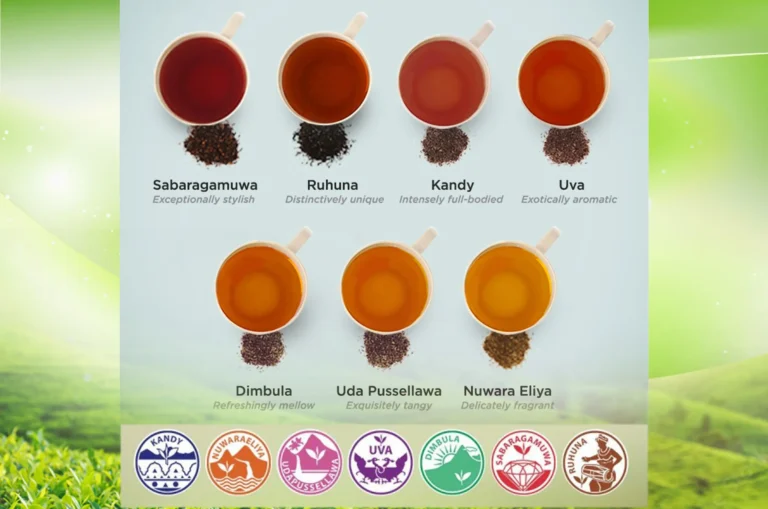
Discover the Seven Unique Sri Lankan Tea Regions
Since its inception at the Royal Botanical Gardens, Peradeniya, the Sri Lankan tea industry has flourished over two centuries. Evolving from humble beginnings, Ceylon Tea has emerged as a global icon renowned for its unique taste and premium quality. Loved by tea enthusiasts worldwide, Ceylon Tea caters to diverse preferences across international markets. Let’s embark on a journey through the seven distinct sri lankan tea regions where Ceylon Tea is cultivated. Consequently, each district contributes its own distinct character, elevation profile, and charm to this beloved beverage.
Kandy Region : The Cradle of Ceylon Tea
Kandy is the historic birthplace of the industry, where James Taylor first planted commercial tea crops. Nestled in the mid-country elevation, this region produces full-bodied teas with a rich copper tone. Furthermore, these leaves deliver a gentle strength and brisk flavor profile that pairs wonderfully with fresh milk.
Nuwara Eliya Region : The Champagne of Teas
Known as the “Golden Valley of Tea,” Nuwara Eliya boasts lush tea gardens situated at an altitude of 6,128 ft above sea level. Cold and wet climate conditions contribute to the production of some of the finest teas globally. Teas from Nuwara Eliya exhibit a greenish-yellow infusion, reflecting their unique terroir and elevation. With two distinct seasons, Nuwara Eliya teas offer a refreshing and fragrant cup, perfect for indulging in the mountainous terrain.
Uva Region: Exotic and Fragrant
Located on the eastern slopes, Uva experiences unique seasonal winds known as the Cachan blow. Consequently, this weather pattern creates teas with an exotic aroma, smooth sweetness, and a distinct woodsy character. It stands out immediately as a favorite for gourmet breakfast blends.
Uda Pussellawa: Bold and Refreshingly Tangy
Situated near Nuwara Eliya, Uda Pussellawa enjoys two distinct monsoon seasons. Therefore, the region yields medium-bodied brews with a bright, rosy liquor. The flavor remains refreshingly tangy, offering an invigorating option for crisp afternoon break hours.
Dimbula: Refreshingly Complex and Aromatic
Dimbula is one of the oldest growing districts, famous for its sweeping high-country valleys. The cool dry weather produces a fine golden-orange color in the cup. In fact, it balances strength and freshness perfectly, making it an ideal choice for classic daily black tea bags.
Ruhuna Region:
With its low elevation and fertile soil, Ruhuna has emerged as a key tea-producing district in Sri Lanka. Formerly occupied by spice growers, the region’s tea estates now yield full-flavored black teas prized for their robust character. Ruhuna teas, with their long, beautiful leaves and dark yellow-brown liquor, offer a bold and rich drinking experience reminiscent of the region’s vibrant history.
Ruhuna: Dark, Robust, and Malty
Sourced from the low-lying rainforest valleys of southern Sri Lanka, Ruhuna features warm, humid soil conditions. For instance, the fast-growing tea bushes produce a dark, heavy leaf. As a result, the liquor remains deeply malty, thick, and exceptionally robust for heavy tea lovers.
Sabaragamuwa: Uniquely Stylish and Smooth
As Sri Lanka’s largest tea-growing district, Sabaragamuwa produces rich low-grown crops similar to Ruhuna. However, its unique soil yields a darker liquor with a hint of sweet caramel and smooth floral notes.
Explore Authentic Sourcing and Quality Standards
Exploring these diverse agricultural districts connects you directly to traditional island mastery. If you want to sample our finest single-origin harvests, feel free to browse our full black tea collection online. You can also discover our long heritage of master blending by reading our story on our website. To learn more about how authentic regional crops are legally tracked and graded across global food markets, you can explore the official resources on the Sri Lanka Tea Board website.
